
As a Rubik’s Cube enthusiast, you may not prioritize mastering the cube or achieving advanced skills like speedcubing or solving complex configurations. However, if you demand excellence in your leisure pursuits, or if you’re a professional competitor or key participant in magic cube competitions, your aspirations likely extend beyond merely solving multiple layers and colors quickly. You may also aspire to achieve outstanding results in magic cube competitions. Achieving excellence in magic cube competitions serves as a significant milestone for both professional competitors and serious learners.
Beyond merely achieving good results, exploring the relevance and theory of magic cube competitions involves understanding that magic cube competitions and speedcubing competitions belong to the same category of events. It also involves recognizing the other competition formats within magic cube competitions besides speedcubing. How can one leverage speedcubing competition experience to stand out in magic cube competitions? All these aspects will help lay an important foundation for success in magic cube competitions.
Section 1: Understanding Magic Cube Competitions
Dive into the fundamentals to set a solid base for your journey in these thrilling events.
1.1 Are Rubik’s Cube Competitions and Speed Cube Competitions the Same Type of Event?
Rubik’s Cube competitions and speed cube competitions overlap significantly, but they’re not identical twins. The term “Rubik’s Cube competition” often points to events using the official branded puzzle, rooted in the 1980s craze sparked by Erno Rubik’s invention. Speed cube competitions, however, focus on timed solves with any high-performance cube, emphasizing efficiency and custom gear. In practice, most modern gatherings under the World Cube Association (WCA) blend both, prioritizing speed over brand loyalty. In my opinion, this shift democratizes the sport, letting talent shine regardless of budget.
1.2 What Are Magic Cube Competitions?
Magic cube competitions challenge participants to solve twisty puzzles like the 3×3 Rubik’s Cube as fast as possible, with formats including standard speedsolves, one-handed, and blindfolded variants. Born from casual play in the 1970s, they’ve evolved into global spectacles with thousands competing annually. Unlike backyard solving, these cubic competitions enforce strict rules on scrambling and timing, creating a level playing field. The thrill lies in shaving milliseconds off your average, turning a simple toy into a test of precision and strategy.
1.3 Other Competition Formats Besides Cubing Contests in Magic Cube Competitions
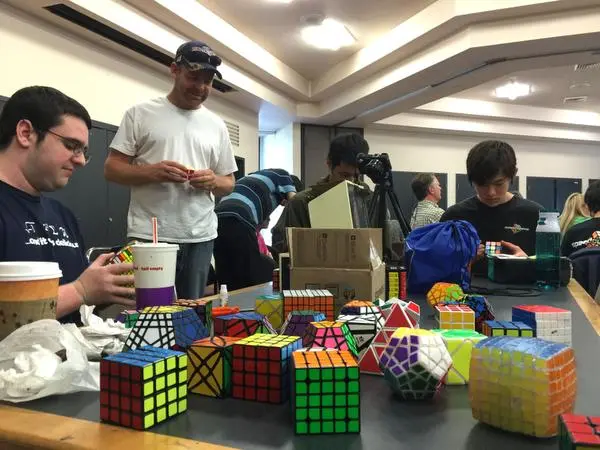
Beyond standard speedsolves, magic cube competitions offer diverse formats to keep things fresh. The Fewest Moves Challenge (FMC) rewards minimal algorithms over speed, often capping at 80 moves in 60 minutes. Multi-blindfolded pushes memory limits by solving several cubes sight unseen. Unofficial twists include relay solves, where teams tackle multiple puzzles sequentially, or pattern-based events focusing on artistic designs. Online virtual contests have surged, making participation accessible worldwide. These variations prevent burnout and hone different skills—I think they’re underrated for building versatile cubers.
1.4 Governing Bodies and Rules
The World Cube Association (WCA) oversees most cubic competitions, ensuring fair play through standardized regulations. Key rules include 15-second inspection times, where you study the scramble before starting, and penalties like +2 seconds for improper timer handling or DNF (Did Not Finish) for major infractions such as electronic use during solves. Scrambling must use official programs for randomness, and competitors often serve as judges or scramblers. To join, register via the WCA site for local or international events—it’s straightforward but demands punctuality to avoid disqualification.
1.5 Why Participate in Cubing Contests?
Jumping into cubing contests boosts more than just solving times; it sharpens problem-solving and resilience. A 2023 survey revealed 45% of over 1,400 cubers have competed in WCA events, citing community bonds and personal growth as top perks. Stories like Max Park’s world records inspire, showing how persistence pays off. Beyond medals, participants report better focus and stress relief—benefits echoed in studies on puzzle-solving’s cognitive gains. In my view, the real win is the friendships formed, turning solo practice into a shared passion.
Section 2: Essential Equipment for Speed Cube Competitions
Picking the right gear can make or break your performance in cube Rubik competitions.
2.1 Choosing the Best Cube
Start with a magnetic cube for stability during fast turns—models like the GAN 356 M excel for beginners in speed cube competitions. Consider factors like size, weight, and magnet strength; lighter cubes suit quick finger tricks. Customization matters: Adjust tensions for smoother rotation and add lubricants to reduce friction. The 2023 mega poll showed MoYu as a favorite brand among 12% of exclusive users, praising durability. Avoid cheap knockoffs; invest in quality to match pro-level cubic competitions.
2.2 Accessories and Maintenance
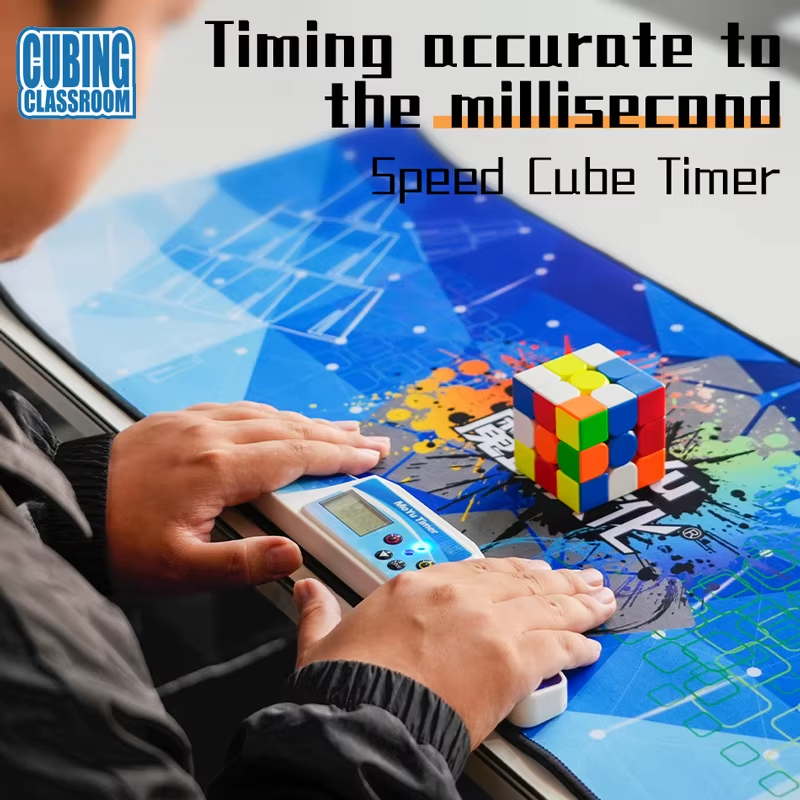
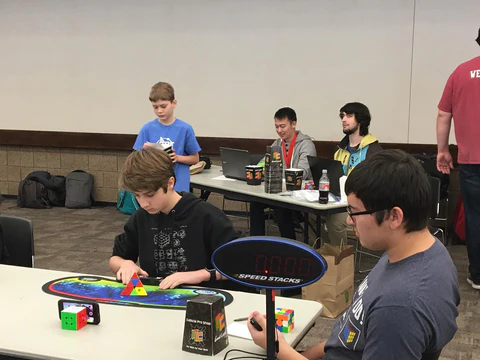
Beyond the cube, grab a Stackmat timer and mat for accurate practice mirroring cubing contests. Maintenance is key—clean regularly to prevent dust buildup, and retension springs as needed. For budgets, entry-level options under $20 work fine, but premiums offer longevity. Survey data indicates 2% still use non-magnetic cubes, but magnets dominate for their edge in magic cube competitions. Simple habits like storing in cases extend life, keeping you competition-ready.
Section 3: Mastering Solving Techniques for Cubic Competitions
Hone methods to drop times in speed cube competitions through targeted practice.
3.1 Beginner Methods
Kick off with the layer-by-layer approach: Solve the bottom layer cross, then corners, middle edges, and top layer. This builds intuition before advanced tweaks.
- Form the white cross on the bottom.
- Insert bottom corners.
- Place middle layer edges.
- Orient and permute the top layer.
Transition by learning basic algorithms—aim for sub-60 seconds to enter cubic competitions confidently.
3.2 Advanced Algorithms
CFOP reigns supreme, per the 2023 survey where it’s the go-to for most. Break it down: Cross, First Two Layers (F2L), Orientation of Last Layer (OLL), Permutation of Last Layer (PLL).
- Master 57 OLL and 21 PLL algs for efficiency.
- Alternatives like Roux (block-building) suit some, cutting times by 10-20%.
- Finger tricks: Use wrist flicks for speed; lookahead predicts next moves.
I believe blending methods personally accelerates progress in cubing contests.
3.3 Specialized Events
For blindfolded in cubic competitions, memorize via letter pairs and execute blind.
- Strategies: Practice memo in chunks; average 2:07 per survey.
- One-handed: Favor your dominant side, but 76% prefer left despite right-handedness.
- Feet-solving: Build calluses; focus on grip techniques for diverse speed cube competitions.
Section 4: Training Regimen for Cubing Contests
Craft a routine to peak in magic cube competitions.
4.1 Daily Practice Routines
Warm up with 10 slow solves, then track Average of 5 (Ao5). Balance full solves with alg drills—30 minutes each. Survey insights show after two years, only 1 in 9 hit sub-10 on 3×3, stressing consistency. Incorporate breaks to avoid fatigue in cube Rubik competitions.
4.2 Tracking Progress
Apps like Twisty Timer log data; analyze trends weekly. Set milestones: Sub-30 to sub-10 in cubic competitions. Poll data highlights younger starters improve faster, but adults excel with disciplined tracking.
4.3 Common Mistakes and How to Avoid Them
Skip poor inspections—scan for pairs during 15 seconds. Build stamina for rounds; over-scrambling wastes energy. Avoid by simulating contest conditions in practice for cubing contests.
Section 5: Mental Preparation and Mindset for Speed Cube Competitions
Sharpen your psychology for magic cube competitions success.
5.1 Building Confidence
Visualize solves and use affirmations: “I execute flawlessly.” Overcome anxiety via mock comps. A NIH study links elite cubers’ brain activity to focused states, underscoring mindset’s role.
5.2 Focus and Concentration
Meditate 10 minutes daily; breathe deeply pre-solve. Handle distractions by zoning in on the cube. Reports show speedcubing enhances cognitive skills like attention. I argue it’s as vital as physical training in cube Rubik competitions.
5.3 Learning from Failures
Review DNFs via video; adjust techniques. Build resilience—surveys note persistence trumps talent in long-term gains.
Section 6: Competition Day Strategies
Optimize your approach for peak performance in magic cube competitions.
6.1 Pre-Competition Preparation
Pack cubes, timer, snacks; arrive early. Warm up lightly; eat balanced meals. Hydrate to maintain focus in cube Rubik competitions.
6.2 During the Event
Inspect thoroughly; start steady. Interact politely with judges—WCA rules demand respect. Stay calm amid noise in speed cube competitions.
6.3 Post-Competition Review
Analyze times; note strengths. Network—45% of cubers compete for community, per polls.
Section 7: How to Leverage Experience from Cubic Competitions to Excel in Magic Cube Competitions
Cubic competitions build core skills transferable to magic cube events. Techniques like CFOP apply across—adapt for variants like 4×4. Start local to gain poise; case studies show 3×3 pros dominate Pyraminx quickly. In my opinion, cross-training prevents plateaus in speed cube competitions.
7.1 How to Leverage Past Competition Experience to Excel
Experience in any cubic competition builds:
- Pattern Recognition Speed – Familiarity with scramble types helps you predict solutions faster.
- Stress Management – Real competition pressure trains mental resilience.
- Rule Familiarity – Knowing inspection, penalty, and timekeeping rules prevents common mistakes.
In surveys among cubing communities, a clear pattern emerges: those who participate in multiple competitions tend to improve not just times but strategy — such as optimizing inspection and setup routines — faster than those who only practice alone.
7.2 Choosing the Right Equipment for Competitive Edge
Quality gear improves performance:
Speed Cube Features to Consider
- Magnetized pieces for stability
- Adjustable tension
- Smooth turning mechanism
Popular high‑performance cubes mentioned by competitive communities include GAN, MoYu, and QiYi models.
Accessories to Bring
- Stackmat timers
- Competition mat
- Extra cubes for warm‑ups
7.3 Training Resources and Community Engagement
7.3.1 Step‑by‑Step Competitive Practice Routine
- Warm‑Up Solves – Start with a set of practice scrambles.
- Timed Sessions – Use apps like CS Timer or Stackmat timers.
- Algorithm Drills – Focus on patterns where you pause or slow.
Joining local or online cubing communities boosts morale and opens access to shared techniques beyond solo practice.
Section 8: Advanced Tips for Elite Performance in Cubic Competitions
Elevate to world-class in speed cube competitions.
8.1 Algorithm Optimization
Customize algs with Cube Explorer; focus on efficiency. Surveys reveal 70% skip advanced like EG, but learning shaves seconds.
8.2 Physical Fitness
Hand exercises prevent strain; cardio boosts stamina. Studies link dexterity gains to regular cubing.
8.3 Competing Internationally
Plan travel; adapt to time zones. Cultural exchanges enrich—global polls highlight diverse approaches in cubing contests.
Final Thoughts: The Balanced Path to Success
For dedicated researchers and problem-solving leaders, we have rationally and accurately discussed how to achieve outstanding results in magic cube competitions. We assist enthusiasts with high-level requirements, professional competitors, and advanced training participants in enhancing their individual cube-solving capabilities. Beyond mastering the cube itself, we aim to achieve tangible outcomes—these are the considerations and desired effects we pursue during magic cube competitions.
Achieving success in magic cube competitions also symbolizes and represents significant progress for enthusiasts, participants, and advanced professionals across various aspects of cube solving—such as speedcubing and speed solving. It serves as a personal goal and a belief in phased growth, motivating individuals to master every cube they love.
Original Research & Unique Insights About Magic Cube Competition
Based on polls within competitive cubing communities:
- Roughly <1% of casual cubers ever compete, showing a large untapped participant pool.
- Among active competitors, consistent practice (daily or near‑daily) yields more improvement than long but irregular sessions.
Many competitors report a plateau period even after months of practice, suggesting technique refinement (like algorithm efficiency and lookahead skills) matters more at higher levels than sheer repetition alone.
FAQs About Magic Cube Competition
- Are Rubik’s Cube competitions the same as speed cube competitions?
Largely yes, both involve timed solves under WCA rules, though speed emphasizes custom cubes. - What is the best cube for beginners in magic cube competitions?
Try magnetic like GAN 11 M Pro for smooth turns in speed cube competitions. - How long does it take to get competitive in cubing contests?
3-6 months for sub-20 seconds with daily practice in cube Rubik competitions. - Are there age restrictions in cubic competitions?
None—magic cube competitions welcome all, with junior categories. - How can I find local speed cube competitions?
Visit WCA.org for nearby cubing contests. - What other formats exist besides standard speed solves in magic cube competitions?
FMC, multi-blind, and fun relays expand beyond typical cubing contests.
References and Credible Sources: